The confinement of Bernarda’s daughters
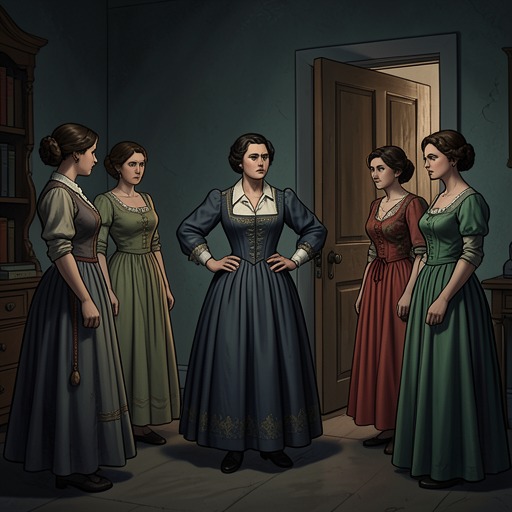
The House of Bernarda AlbaThe confinement of Bernarda’s daughters is the physical and emotional enclosure at the center of The House of Bernarda Alba. High walls and restricted access to the outside world make the house resemble a prison, while domestic duties, surveillance, and the demand to protect the family’s reputation extend that confinement into the daughters’ daily lives. The arrangement embodies traditional expectations for women and makes the household a concentrated portrait of social pressures in contemporary Spain.
The House as Enclosure
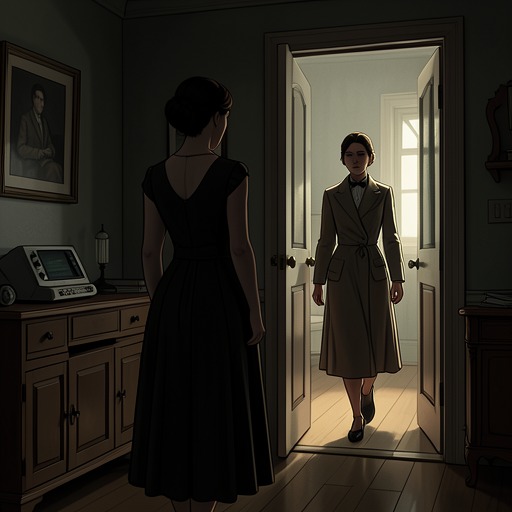
The stage directions turn confinement into a visible feature of the setting. The house’s thick walls suggest both physical imprisonment and emotional isolation; the inner courtyard intensifies that effect. Although the characters may see the sky, the production notes recommend that the audience should not, and that high surrounding walls make the women seem to stand at the bottom of a well, with nature beyond their reach. The progressively enclosed spaces shape the stage world around what the daughters cannot access.
White walls contribute to the house’s stark appearance while carrying several associations: the daughters’ expected purity, Bernarda’s concern with an unblemished reputation, and the monotony and sterility of their lives. The tolling bells add the pressure of the Church and village tradition. Meanwhile, paintings of implausible landscapes evoke a magical world from which the women are excluded. The domestic interior thus sets ideals of purity and respectability beside a life restricted by them.
Domestic Discipline and Gender Roles
The daughters’ enclosure is sustained not only by architecture but by the work assigned to them. Lorca’s stage direction places women on low chairs sewing, an image that connects confinement to domestic duty and contrasts their lives with the freedom granted to men. In the wider social order described in the commentary, single women’s lives are devoted to sewing and embroidery, while married women are expected to serve their husbands, run the household, and bear children. Bernarda’s authority makes these conventions active rules within the home.
The play’s documentary ambition gives this household arrangement social reach. Lorca described the three acts as a photographic documentary and presented the play as a drama of women in Spanish villages. Its realism was intended to expose contemporary social and moral conditions. The commentary situates Bernarda’s views against the Second Spanish Republic’s efforts to improve women’s status and the Right’s return to power in 1933; it notes that the Francoist ideal of a woman’s place in the home would dominate Spain for decades after the Civil War. The enclosed house therefore registers a conflict between women’s restricted lives and wider political arguments about their status.
Surveillance, Reputation, and the World Outside
The walls do not keep social judgment out. Concern about what neighbors might hear or say helps make the daughters’ home a place of surveillance, where family respectability depends on controlling both behavior and information. The commentary connects this anxiety to the village’s wider concern with family name and reputation, shared even by characters who differ from Bernarda. The play’s realism presents these pressures as part of provincial life beyond one household, not merely as Bernarda’s private eccentricity.
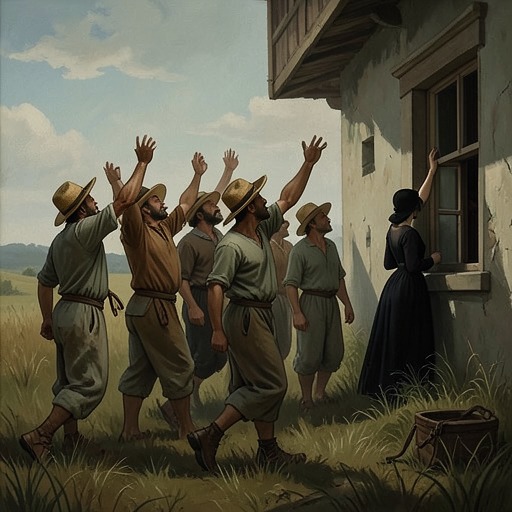
The contrast between enclosure and the village outside becomes especially sharp when Poncia reports that an unmarried woman has killed her child and that villagers are pursuing her. Bernarda urges the crowd onward, while Adela objects to killing the woman. The episode shows how social judgment can become collective violence, and how the domestic code of honor extends beyond the walls into the community. The daughters’ confinement belongs to the same order that polices women outside the house.
Conflict and Significance
Poncia identifies the limits of Bernarda’s apparent control: the daughters live as if shut away in a cupboard, she says, but no one can see inside their hearts. The distinction between outward obedience and inward life exposes the weakness in the household’s system. Surveillance can restrict movement and demand conformity, but it cannot make desire or conflict disappear. The enclosure therefore contains tensions it cannot resolve.
At the end, Bernarda responds to Adela’s death by insisting that the family present her as a virgin, forbidding weeping, and commanding silence. Her final effort to control what the community will hear completes the pattern linking physical confinement to secrecy and reputation. The house has kept the daughters apart from the world, but it cannot prevent the consequences of the pressures inside it; instead, its authority turns toward concealing them. This combination of realistic household detail and broader social meaning helps explain the play’s enduring relevance, including later critical recognition of the universality of Lorca’s vision.